Tuesday, July 19, 2011

A healthier way to replace your soda fix!

Forget the empty calories, chemical sweeteners and artifical flavors... fill up your cup with fruity teas in hundreds of different flavors. Drinking peach white and green teas with a bit of honey helped me break the soda addiction more than 10 years ago.
The added bonus is you'll also get a good dose of cancer fighting antioxidants and much more! Check out the 10 reasons to switch to tea below. I stopped by the cutest tea boutique in South Tampa on Davis Islands.
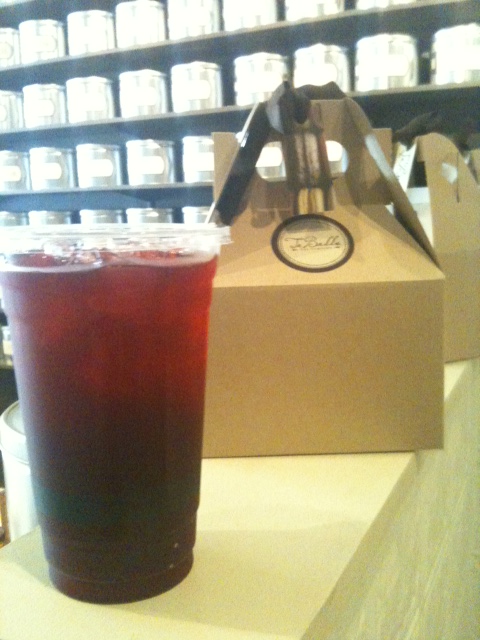
TeBella sells hundreds of loose-leaf teas including many organics. The owner is pretty funny too... he says why support the corporate tea stores when you can help his 10-month-old pay for college!

Get a fresh perspective on health: Check out Heather's Natural Health


1. Tea contains antioxidants. Antioxidants protect your body from pollution and diseases.
2. Tea has less caffeine than coffee. Coffee usually has two to three times the caffeine of tea. An eight-ounce cup of coffee contains around 135 mg caffeine. Tea contains roughly 30 to 40 mg.

3. Tea may reduce your risk of heart attack and stroke. Researchers say drinking tea may help keep your arteries smooth and clog-free. A study from the Netherlands found people who drank at least two to three cups of black tea a day had 70 percent lower risk of fatal heart attack compared to non-tea drinkers.

4. Tea protects your bones. One study suggests the phytochemicals in tea contributes to strong bones.

5. Tea gives you a sweet smile. Tea contains natural fluoride and tannins that may keep plaque at bay.

6. Tea bolsters your immune defenses. Drinking tea may boost your body’s immune system and fight off infection.

7. Tea helps protect against cancer. Researchers credit polyphenols, antixidants for the potential protective benefits.

8. Tea helps keep you hydrated. Drinking tea throughout the day will keep fluids flowing through your body.

9. Tea is calorie-free. Drinking flavored teas can be a healthy way to satisfy your sweet tooth. Adding a dollup of honey sweetens it a bit without too many extra calories.

10. Tea increases your metabolism. Researchers say drinking five cups of green tea a day increases your metabolic rate. Of course drinking your tea during a walk will burn even more calories!

Tuesday, July 12, 2011

Beat the heat one bite at a time!

When the temperature reaches 90+, you can't help but look for ways to cool off.  Creamy frozen yogurt hits the spot! I love this new yogurt place at the mall...yum!


Have you checked out the new Pinkberry Yogurt at Westshore mall, right next to P.F.Changs?   

They have mouth-watering flavors including pomegranate, mango, chocolate, green tea and so many more!
The caramel with sea salt is worth a taste too!


Wednesday, June 15, 2011

"Dirty Dozen" most pesticide laden produce


EWG's Shopper's Guide to Pesticides in Produce

Dirty Dozen
Buy these organic
1
Apple
Apples
2
Celery
Celery
3
Strawberries
Strawberries
4
Peaches
Peaches
5
Spinach
Spinach
6
Nectarines
Nectarines
– imported
7
Grapes
Grapes – imported
8
Red Pepper
Sweet bell peppers
9
Potatoe
Potatoes
10
Blueberries
Blueberries
– domestic
11
Lettuce
Lettuce
12
Kale
Kale/collard greens

Clean 15
Mushrooms
Lowest in Pesticide
1
Onions
Onions
2
Sweet Corn
Sweet Corn
3
Pineapple
Pineapples
4
Avocado
Avocado
5
Asparagus
Asparagus
6
Peas
Sweet peas
7
Mango
Mangoes
8
Eggplant
Eggplant
9
Cantelope
Cantaloupe
- domestic
10
Kiwi
Kiwi
11
Cabbage
Cabbage
12
Watermelon
Watermelon
13
Sweet Potatoes
Sweet potatoes
14
Grapefruit
Grapefruit
15
Mushrooms


Red, yellow, green... there are more than 7500 different types of apples!
I love green Granny Smith. They're tart, easy to eat on the run and extra delicious dipped in raw almond butter-yum!


When I was pregnant with my daughter, green apples were my number two craving--I ate at least one apple a day (of course my number one craving was dairy-free, mint chocolate chip coconut milk ice cream!).


Apples are loaded with vitamin C, fiber and antioxidants and most likely something else: pesticide residue!
In fact, according to U.S. Department of Agriculture and Food and Drug Administration testing, apples top the list of the 2011"Dirty Dozen" most pesticide laden fruits and vegetables.
A non-profit, consumer advocacy group called the Environmental Working Group analyzed the government data and created the "Dirty Dozen" and "Clean 15" to help you know which fruits and vegetables are worth buying organic.
According to the USDA tests, pesticides showed up on 98 percent of the 700 apples tested.
All produce was washed and peeled before testing.
The USDA even found 33 unapproved pesticides on 44 cilantro samples which is the most unapproved pesticides found on one type of produce since EWG started tracking government produce tests back in 1995!
Clearly, this isn't meant to stop you from eating fresh fruits and vegetables. This list is to help you buy what's best for your family. 


Eating 5 servings of produce from the Dirty Dozen list could expose you to 14 pesticides a day, while picking produce from the Clean 15 lowers that to two. Or buy organic produce when possible, especially if you're pregnant or feeding young kids. 


Integrative medical doctors also encourage you to buy organic or from the Clean 15 list when possible.
A study in the journal Pediatrics found kids with an above average level of a common pesticide in their urine had twice the odds of being diagnosed with ADHD.
"I really worry that pesticides on food are unhealthy for the tender, developing brains and bodies of young children," said Dr. Harvey Karp, MD, FAAP, creator of the book/DVD The Happiest Baby on the Block. "Parents don't realize they're often feeding their little ones fruits and veggies with the highest pesticide residues. Studies show even small amounts of these chemicals add up and can impair a child's health when they're exposed during the early, critical stages of their development. When pesticide sprayers have to bundle up in astronaut-like suits for protection, it's clear parents want to feed their families food containing as little of these toxic chemicals as possible."
"Pesticides, while designed specifically to kill certain organisms, are also associated with a host of very serious health problems in people, including neurological deficits, ADHD, endocrine system disruption and cancer," said Andrew Weil, MD, Founder and Director, Arizona Center for Integrative Medicine and a renowned medical expert on natural health and wellness. "My advice to shoppers is to whenever possible avoid exposure to pesticides, including pesticide residues on food."


Now that I am a busy mom, I am stilling eating an organic green apple a day... it's one of my favorite, fast foods to grab and go!


Thursday, May 5, 2011

Hypnobirthing: Using relaxation instead of pain medication during childbirth

Heather's Hypnobirthing story: Did it deliver?

A CBS TV News Anchor finds out if relaxation can replace pain medications during childbirth.


OK, OK... it is NEVER easy showing ANYONE your personal labor and delivery video! Yikes!
Plus, I was 41 weeks pregnant! I thought I was going to explode!
But I had to get past the embarrassment because so many people have asked me if I REALLY used the Hypnobirthing techniques I profiled in this story: Hypnobirthing:Does it really work? 

When I was 8 months pregnant, I interviewed half a dozen moms who told me how Hypnobirthing classes helped them relax before, during and after giving birth, to the point that many did NOT need any pain medications!
It sounds crazy, right? I honestly couldn't believe it! That's when I made the on-air promise that I would take Hypnobirthing classes and see if the relaxation technique really worked for me.
I figured I had nothing to lose... if I needed pain medication or any emergencies popped up, I was at Bayfront Babyplace and would do whatever the doctor wanted me to do.

*Here is my one disclaimer to all pregnant moms
This is a guilt-free story!
We can plan for exactly the kind of birth we would like to have, but in the end, it's not up to us. We have to be flexible and open. I knew at any moment I might have needed a C-section or medical intervention.
We all just want healthy babies. A memorable birth experience is an added bonus.
My husband supported me every step of the way and wanted to make sure I didn't "suffer" at any point. That's one of the reasons we decided to have a doula (which means mothering the mother) guide us through the process. While the doctor may be in and out of the room, a doula is ALWAYS at your side, making sure you are comfortable, coaching you and explaining what will happen next.
I had an incredible Doula, Jane Parker, (click here to read about what a doula does in the delivery room.) Jane is essentially a birth coach, but I found her to be more like my mom that day in the delivery room! I could NOT have done this without her encouragement, education and pure love.
I also had a wonderful relationship with my OBGYN, Dr. Sheila Devanesan. We talked about my birth wishes but I trusted her to do what was best for my baby and me.
 This may surprise you... before I wrote any of these stories, my husband and I had decided NOT to take any childbirth classes. He's in the medical field so we figured he would guide us and we really didn't have a lot of extra time.
When I started asking my girlfriends whether I should take any classes, I found those who did prepare (classes, books, prenatal yoga) had much better experiences. Another TV reporter friend of mine, sent me this DVD - The Business of Being Born - so I could at least understand my options and see why it's important for parents to prepare beforehand. Initially, we didn't really want to watch it (we thought it might be too graphic or boring) but my husband and I both agreed it was worth it.
After hearing all of the positive, emotional and sweet birth stories from Hypnobirthing moms, we paid for several classes. I figured at the very least, I would learn a great relaxation technique.
I am a bit of a granola girl at heart, (Heather's Natural Health) so I can admit, that I did like the idea of not having any pain medications or pitocin in my system or my baby's body. There is something sweet that happens right after you give birth and your baby naturally knows what to do (where to go for her first meal!) and your body responds.

 Here's what I learned throughout this experience:
-Relaxation is key to an easier labor and delivery. Other mammals relax when they give birth so the body can do what it is designed to do. When we tense up, it magnifies the pain and slows down the process.
-I was able to use the Hypnobirthing technique because I had the guided imagery CD playing over and over in my iPod during my 6 hour labor/delivery. Yes, it sounds kind of funny when you first hear it. I listened to it for weeks before birth and it really helped remind me how to breathe through the contractions.
-Contractions are not a constant pain. They build up like a wave, hit a peak and then subside to the point I could "relax like a ragdoll" even toward the end of labor.
-Because I did not have pitocin or any medications that "sped up the process or numbed my feeling" I found the rhythmic, wave-like contractions tolerable. I did yelp at the end when I gave birth to Kingsley (7 pounds, 9 ounces!) My husband says my eyes popped open and I looked like they might pop out of my head! Yes there were a few moments of pain, but they were tolerable and most importantly temporary.
-Even though nurses may encourage you to "push, push, push" hypnobirthing encourages you to go with the flow of your body. Pushing may cause tearing... so as I followed my body at the end of the process... I would feel a "tsunami" contraction... followed by a minor contraction that barely registered! It's as if your body takes time to recover and allows the baby to relax right before she appears.
If I had to do it all again, I would do it the exact same way. I realize that if we have another child, there is still no guarantee that I'll have the same type of birth.
I am happy I took the Hypnobirthing classes and my birth experience turned out the way I had hoped. There were moments where we knew things could change (Kingsley was in the wrong position for most of my labor) I trusted my doctor to do what she thought was needed for the health of my baby. I think giving birth naturally, without any pain medications is like training for a marathon. I personally, would NEVER want to do it without all the prep work!

Wednesday, April 6, 2011

Fitlife Foods opens in South Tampa

Just in time for the summer swimsuit season, Fitlife Foods opens in South Tampa.
It's a new, healthy, calories-already-counted-for-you, prepared meals to go place!

(CHECK OUT THE PHOTOS BELOW)

No more excuses that you don't have time to count calories or eat healthy foods...
Fitlife Foods offers dozens of grab-and-go goodies including breakfast, lunch, snacks and dinner.
Prices range anywhere from $2.25 to $11.25.
Fitlife Foods has 7, 14, and 21 day meal plans designed to help you lose weight, stay in shape and gain energy.
I tasted some of their top sellers. The miso salmon with red quinoa was my favorite (I would pay an extra charge for wild salmon).

Get a fresh perspective on health: Check out Heather's Natural Health

I talked to David, owner of Fitlife Foods, to see how he came up with the concept:

-Why did you decide to create Fitlife Foods?

Fitlfe Foods was born from a love of delicous food and a love of competitive running-from 5Ks to the Boston Marathon. With a 10+ year background in the restaurant industry, I finally decided to mash both my love of delicious food and requirements for lots of energy together and help other people at the same time.

The Fitlife Foods’ mission is to help people save time, manage their weight or achieve their performance goals while finding more energy. I’ve always enjoyed reading about food in magazines and, as a consumer, believed there was a need for someone else doing “all the work” for you. That’s just what Fitflife Foods is about.

Our commitment at Fitlife Foods has always been that food has to be delicious first, then we need to make sure it is healthy. That is where the creativity comes into play. It's easy for chefs to use butter and salt to make something taste good. It's far more challenging to meet the delicious criteria using spices and marinades to make it healthy.

-What is your food philosophy?

Fitlife Food is about “balance.” Fitlife Foods is not a “diet” company. We don’t do tofu and sprouts. The Fitlife Foods philosophy is simple: Eat delicious food. Eat healthy food. Not one or the other.

We focus on balance so energy stays up throughout the day. Our meals are about 35 - 40% low glycemic, high fiber carbs, 30 - 35% lean protein and 25 - 30% healthy fat. Customers come in and say they don't eat carbs or fat. We change that philosophy and put fewer restrictions on their diet by saying, “Stay balanced. Stay fit. Be happy. We’ll do the work for you.”

-How is your ready made food business different than the others?

At Fitlife Foods, there are three things that we do differently than other companies.

First, we are flexible. Customers can come in and pick up one meal or several meals for the next day or several days, or they can get on a 21-Day Challenge or start a “Member Meal Account.” It's their call.

Secondly, Fitlife Foods is hands-down the best tasting! Great chefs make good food. Great ingredients make amazing food. Having a Culinary Director (Davis Jaeger) who understand how to make the best tasting food using the healthiest ingredients has been paramount to our success. Our extensive menu of 41 items ranges from BBQ Beef and Mac ‘n Cheese (yes it’s healthy!) to Miso Salmon, Oatmeal Brulee and Feta Stuffed Chicken. Our home-made energy bars fly off the shelf!”

Among the benefits I’ve had of being in the restaurant business for so long, is that I have established strong relationships with a number of chefs at the top spas and resorts throughout the country. It's been a fun and challenging collaboration to bring these extraordinary techniques for making delicious and healthy meals to the Tampa Bay area people in their everyday lives. Fitlife Foods also uses well-known ingredients that consumers may purchase at Publix’s Greenwise or Whole Foods Stores - brands like Maranatha Almond Butter, Fage Greek Yogurt, Eden's Organic Black, Garbanzo & Kidney Beans, etc.

Finally, we are local. We care about the people in our community and are passionate about helping them save time and eat well. We invite our customers to come into our kitchen. We’ll even give them a behind-the-scenes tour so they can make the choice for themselves.

-How does it work? Do you pick up several days worth of meals? Do you deliver?

Customers can come into Fitlife Foods and pick up a fresh, never frozen meal, from one of the coolers for one meal or several. All of the Fitlife Foods meals has a "best by" date of 3 - 5 days from when it is made, along with the nutritional content. Prices range from $1.95 for snacks to $11.75 for our Large Ab tight tenderloin. Our extensive menu is offered in small-, medium- or large-size proportions...we recognize that we’re all different. We pride ourselves in offering flexible options of meal sizes. For example, an Offensive Lineman and a 70-year old grandmother should not have to eat the same portion and in turn pay the same for that.

At the end of April, Fitlife Foods will begin on-line ordering and delivery. Companies can set-up delivery days and we will also start drop-off locations at several local fitness centers to make our meals are as convenient as possible for our customers. Larger orders of $100+ will also be able to schedule a delivery with 24 hours notice for a small fee.

-Tell me how the 7-14 day challenge works

Fitness and nutrition experts say it takes 21 days to form a habit. We offer 7-, 14- and 21-day challenges to try Fitlife Foods out and experience a change in energy levels and feeling better. Since opening February 28th, we have had the most interest in these weekly challenges from our customers.

As we said before, a customer can come in for one meal and be on their way. But, the ideal way that Fitlife Foods can benefit a person is that a customer comes in and meets with one of our Wellness Coaches for a full “wellness assessment.” The coach will talk to the customer about their goals and performs baseline measurements.

In addition to traditional methods, were also equipped with a bio-electrical impedance analysis machine to determine body composition or the number of calories you burn at rest. Then we suggest the size and portions of meals that are the right size for the individual: small, medium or large - depending on their goals for performance achievement, weight loss or just simply, daily nutrition.

With the “Wellness Assessment”, Fitlife Foods provides customers with a water bottle as well as an insulated cooler bag. Then they come in twice a week and pick up their meals (or of course, after delivery service is available in late April, have them delivered). After 21 days we invite them back to have a follow-up wellness session to see the results. Prices start at $24.25 for the two sessions, the water bottle, cooler bag and breakfast, lunch, dinner and two snacks a day.
 
Check out some of the samples meals below:


Power Morning Tortilla
Calories: 260
Fat: 9g
Carb: 25g
Protein: 18g
Fiber: 3g


Feta Stuffed Chicken
Calories: 326
Fat: 15g
Carb: 22g
Protein: 29g
Fiber: 8g


Miso Salmon:

Calories:372
Fat: 15g
Carb: 18g
Protein:41g
Fiber: 2g


Morning Muesli:
Calories: 230
Fat: 7g
Carb: 36g
Protein: 9g
Fiber: 6g
Thursday, March 31, 2011

STUDY: Fresh foods lower chemicals that build up in your body

Adults and children can reduce their exposure to hormone-disrupting chemicals, including bisphenol-A (BPA), by eating more fruits and vegetables and less food from plastic containers and metal cans, a study says.
A group of 20 San Francisco residents had 66%. less BPA in their urine after spending three days on a diet of fresh, organic and unpackaged food, scientists found. Their levels of another chemical, bis(2-ethylhexyl) phthalate or DEHP, fell 53% to 56%..
"This is the first study to provide clear evidence that food packaging is a major source of BPA and DEHP exposure in children and adults," says co-author Julia G. Brody,. executive director of the Silent Spring Institute, a Massachusetts-based nonprofit that studies environmental factors in women's health.
BPA is so prevalent in food packaging and other consumer items that prior research has detected its presence in at least 90% of Americans. It's used to harden plastics in products such as bottles and cups and is also found in the linings of metal cans and thermal cash register receipts. Phthalates such as DEHP are used to soften PVC and other plastics.


Check out my BLOG to see how I lower my exposure


Much debate exists about what constitutes a safe level of these chemicals, which have been linked in studies to breast cancer, heart disease, diabetes, male infertility and other health problems.
The American Chemistry Council, which represents plastic manufacturers, argues BPA levels remain safe. In Jan. 2010, the Food and Drug Administration expressed "some concerns" about its potential effects on the brain development of fetuses, infants and children. It did not say the chemical is unsafe.
"FDA supports reasonable steps to reduce exposure of infants to BPA in the food supply," said FDA spokesman Douglas Karas,. noting infants are particularly sensitive because their neurological and endocrine systems are still developing.
Karas said the U.S. government is spending $30 million for the National Institutes of Health to research BPA's safety, and the FDA is supporting the efforts of food packaging companies to find alternatives. More U.S. cities and states, led by Chicago, Connecticut and Minnesota, are banning BPA use in food and drink containers intended for children 3 and younger. Canada has banned its use in baby bottles, and beginning in June, the European Union will ban the import and sale of such bottles if they contain BPA.
To detect the impact on food packaging, a team of nine scientists - some with Brody's group and others with the Breast Cancer Fund - studied five families in San Francisco, each with two children and two adults, in January 2010. They tested the participants' urine before, during and after a three-day diet that consisted of organic, fruits, vegetables, grains and meat and banned plastic utensils as well as storage and heating containers. Their research appears today in the peer-reviewed journal Environmental Health Perspectives.
The American Chemistry Council, in a statement, said the study shows "consumers have minute exposures to BPA and DEHP from food sources, and that the substances do not stay in the body, but are quickly eliminated through natural means."


The study found that BPA levels went back up once families returned to their regular diets. Its authors recommend these five tips to reduce exposure to BPA and other hormone-disrupting chemicals:

  1. The Fresh is best. BPA and phthalates can migrate from the linings of cans and plastic packaging into food and drinks. While it's not practical to avoid food packaging altogether, opt for fresh or frozen instead of canned food asmuch as possible.
  2. Eat in. Studies have shown that people who eat more meals prepared outside the home have higher levels of BPA. To reduce your exposure, consider cooking more meals at home with fresh ingredients. When you do eat out, choose restaurants that use fresh ingredients.
  3. Store it safe. Food and drinks stored in plastic can collect chemicals from the containers, especially if the foods are fatty or acidic. Next time, try storing your leftovers in glass or stainless steel instead of plastic.
  4. Don't microwave in plastic. Warmer temperatures increase the rate of chemicals leaching into food and drinks. So use heatresistant glass or ceramic containers when you microwave, or heat your food on the stove. The label "microwave safe" means safety for the container, not your health.
  5. Brew the old-fashioned way. Automatic coffee makers may have BPA and phthalates in their plastic containers and tubing. When you brew your coffee, consider using a French press to get your buzz without the BPA.      USA TODAY ARTICLE

Thursday, March 24, 2011

Strawberry season--Make your own jam!

We're lucky to live in Florida where many fruits and vegetables are grown close to home. I was talking to a friend of mine here at the TV station, Cara Mueller/promotions, about how I wish I could make my own fresh, strawberry or blueberry jam!


The berries would be perfectly ripe... I would know what ingredients are in the jam (no Red Dye #40!) and I could enjoy it year round.

Next thing I knew, I had a cute little jar of bright red jam on my desk! It is DELICIOUS! Thanks Cara!


She shared how easy it is to make:

Make a quick run to the store pick up canning jars, a box of pectin (just ask any store employee where it is), sugar, and strawberries. The box of pectin will have your recipe right on the back, or just inside the box.

Check out where you can find locally grown strawberries in our area on localharvest.org

From collecting ingredients to doing the dishes ... making jam doesn't take more than 2 hours, tops. And that's including tasting the finished product.

It's a simple way to make sure that you know everything that's in the jam you are spreading on your toast - and a great way to take advantage of all the beautiful strawberries Florida has to offer.

Get a fresh perspective on health: Check out Heather's Natural Health